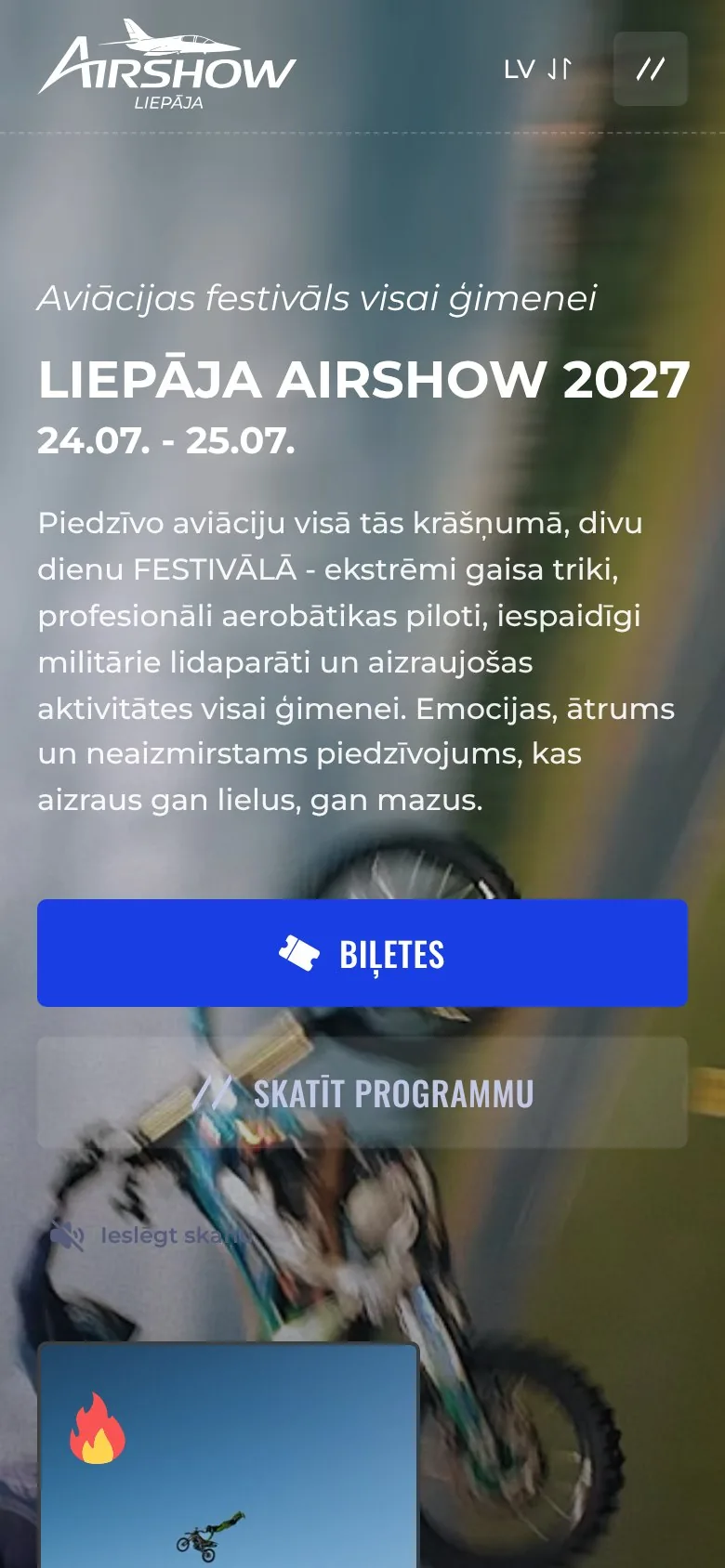
An event website is not like a company website. It has a date after which visitor interest drops sharply, a content flow that keeps changing until the last day, and an audience that partly speaks another language. The Liepāja Airshow website airshow.lv taught us several things that are useful for any event.
The brief
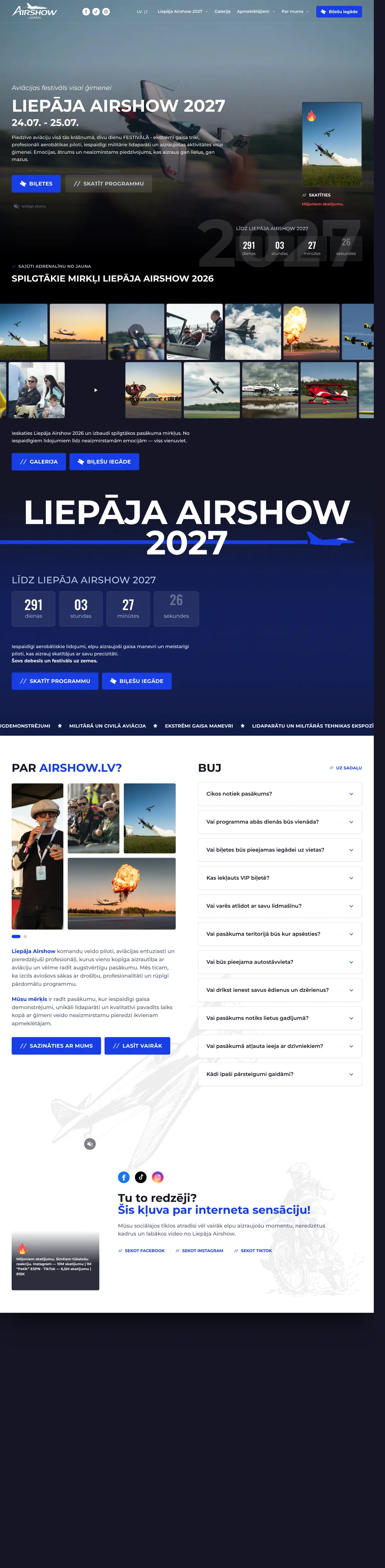
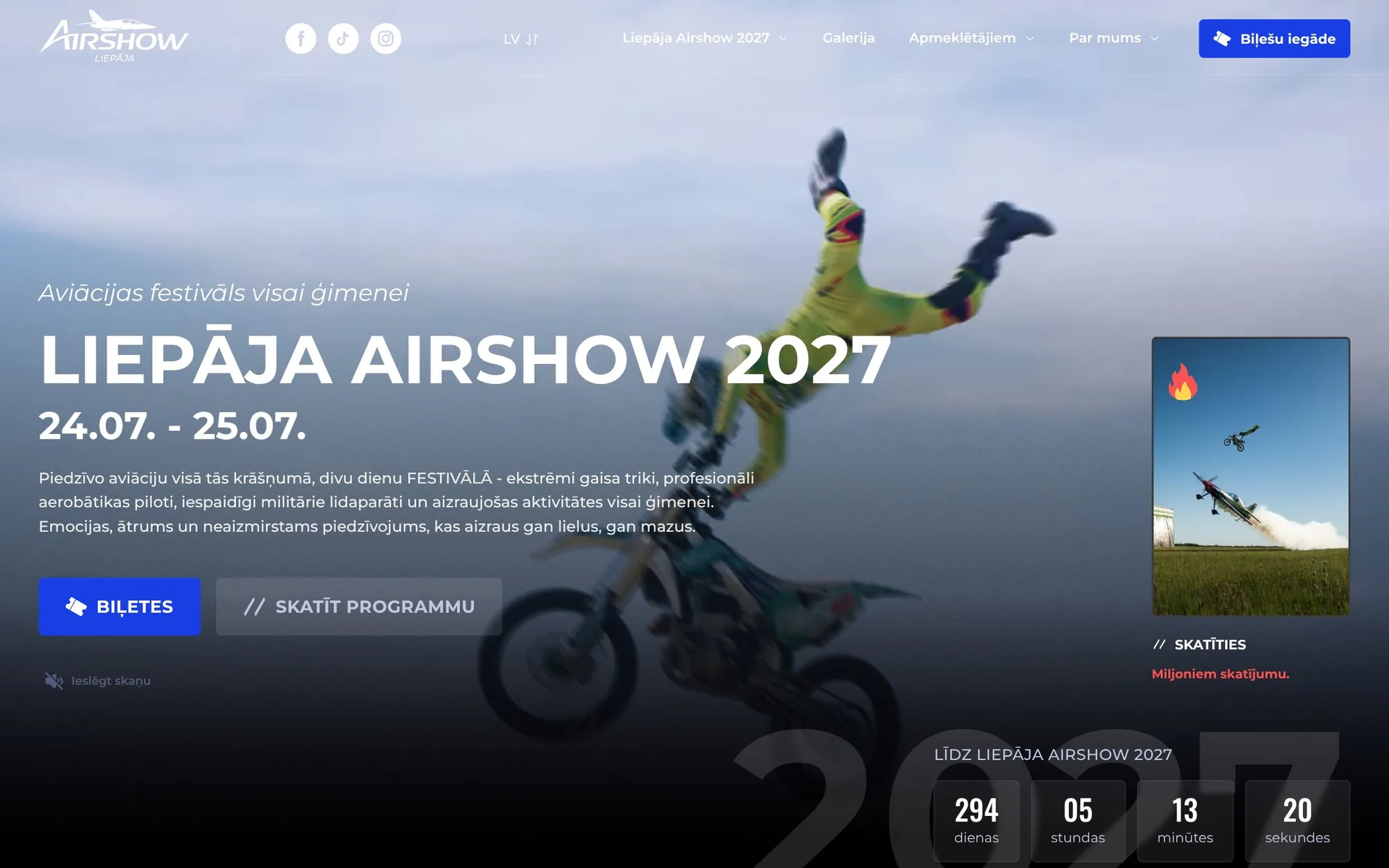
Liepāja Airshow 2027 will take place on 24 and 25 July 2027. The website had to work in Latvian and English, show video and a gallery from previous years, count down to the event and lead visitors to tickets. The site is built on WordPress, with languages managed by WPML.
On top of that, the site had to serve several audiences at once: families planning a weekend out, aviation enthusiasts, pilots and partners. Each has their own questions, and nobody wants to dig through information meant for others.
What we learned
Navigation built around the visitor, not the organiser
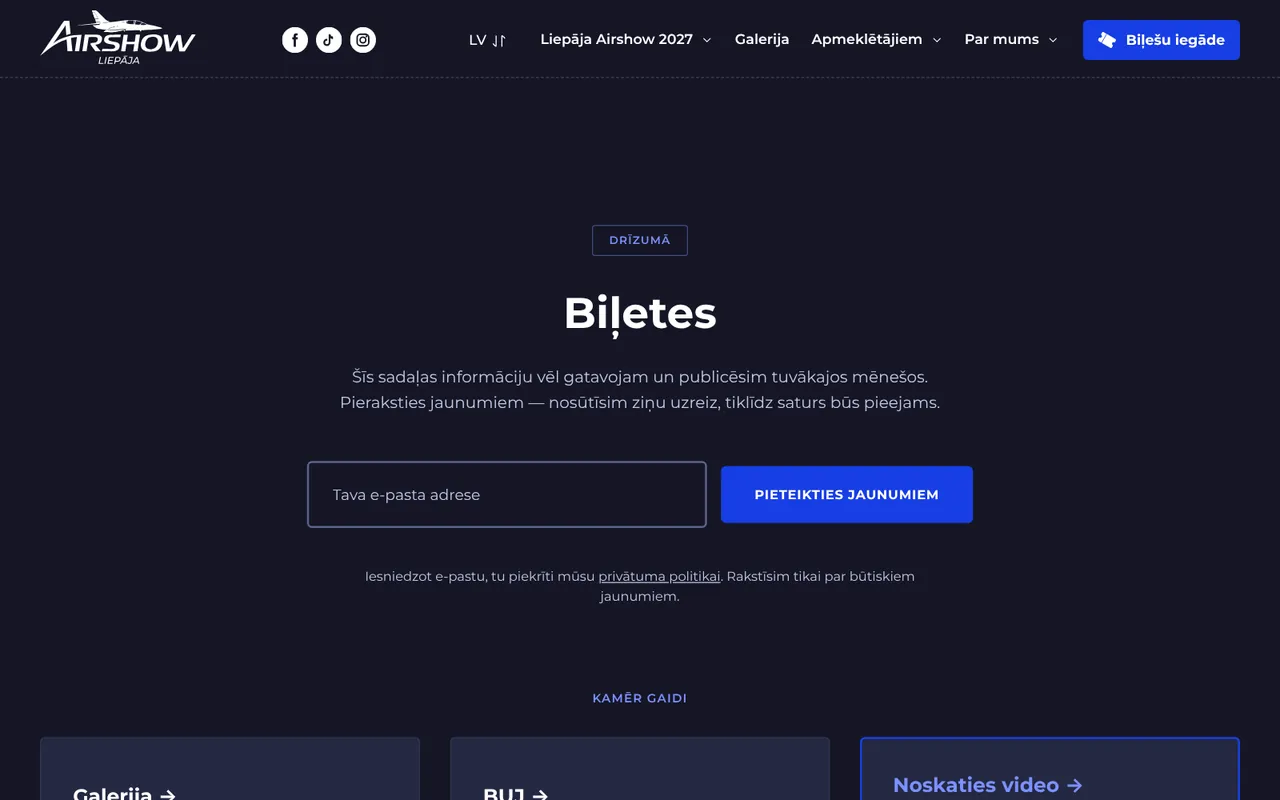
The original structure reflected how the organisers see the event. Together with the client, we rearranged it around visitors’ questions: what is happening, when, how to get there, where to buy tickets. We renamed the “Useful” section to “For visitors”, because that is exactly where people look for practical information.
Plan the second language in the design, not after launch
English texts tend to be shorter, but buttons, programme tables and navigation differ enough between the two languages to break a narrow layout. So we tested every block with texts in both languages while still in Figma.
A countdown is a feature, not a decoration
The timer has to count in the event’s time zone, not by the visitor’s computer clock, and after the start it has to switch to a different message. It seems like a detail until a visitor from abroad sees the wrong number of hours.
Video with a fallback plan
On a phone with a slow connection, the hero video must not block the page. The video loads only once the page is already visible, and until then a cover image is shown. On a slow connection the image stays, and the visitor does not even notice.
Content changes until the final week
The programme, participants and partners appear gradually. The site has to be built so that the client can add a new participant or programme item themselves, without breaking the layout or calling a developer.
Tickets one click away from anywhere
Most visits end with one of two questions: when, and where to buy tickets. That is why the navigation is sticky and the ticket button is visible anywhere on the page, including on a phone. It sounds obvious, but on many event websites you have to hunt for tickets in the footer.
A gallery that does not load everything at once
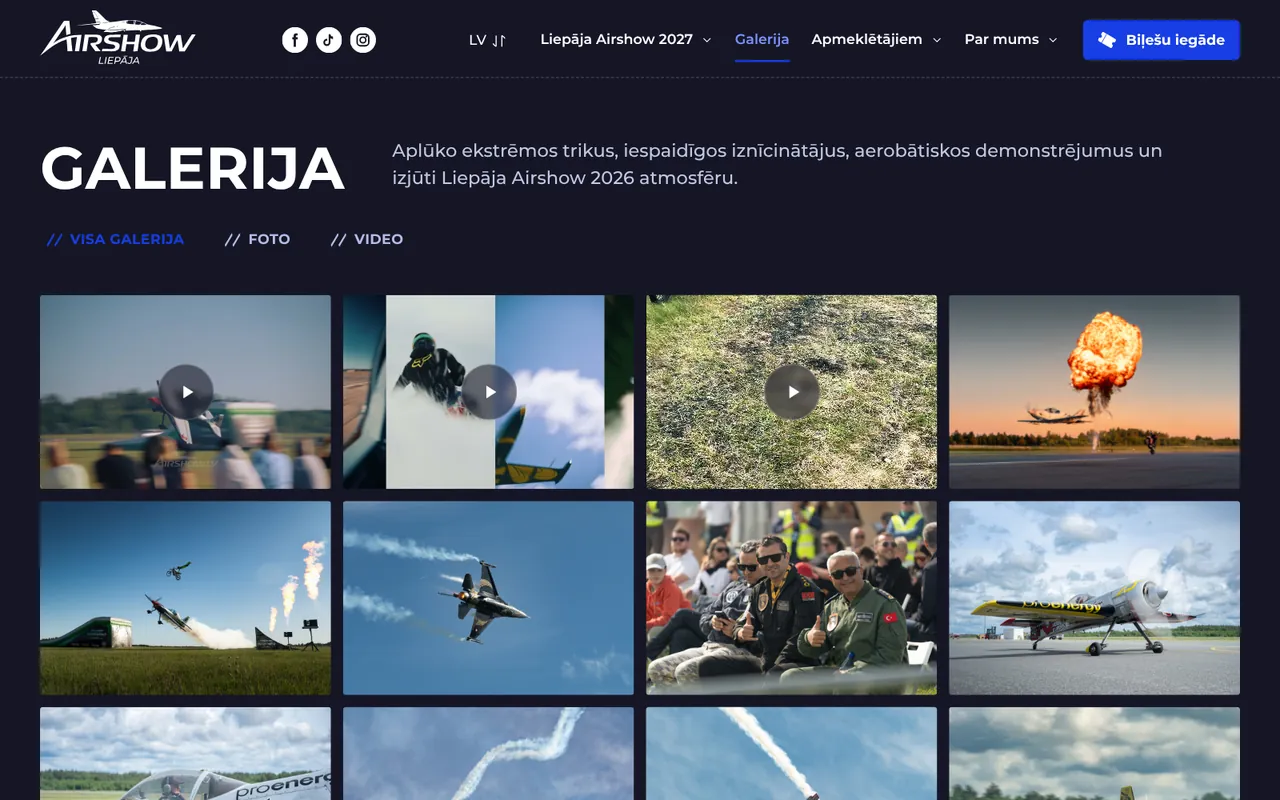
Airshow photos are large, and there are many of them. The gallery shows reduced versions, loads images only as they approach the screen, and opens the full size only after a click. That keeps the site fast even on mobile data in a field next to the runway.
Search engines need to know the date and the place
We describe the event data with Event schema: name, date, venue and ticket link. This helps Google and AI assistants answer the question “when is Liepāja Airshow” with the right information.
What we would do the same way
- Navigation built around visitors’ questions
- Both languages tested already at the design stage
- Timer based on the event’s time zone
- Video loads after the page appears
- Content blocks the client adds on their own
Check for yourself
Everything you've read about is live. Open airshow.lv and explore these sections yourself.
Frequently asked questions
WPML or a separate site for each language?
For an event with shared content, WPML is more convenient: one admin panel, linked translations and correct hreflang tags. Separate sites only make sense if the content differs significantly between languages.
When should you start building an event website?
At least four months before ticket sales begin. That leaves time for design, translations and for the site to appear in Google before the main wave of searches starts.