
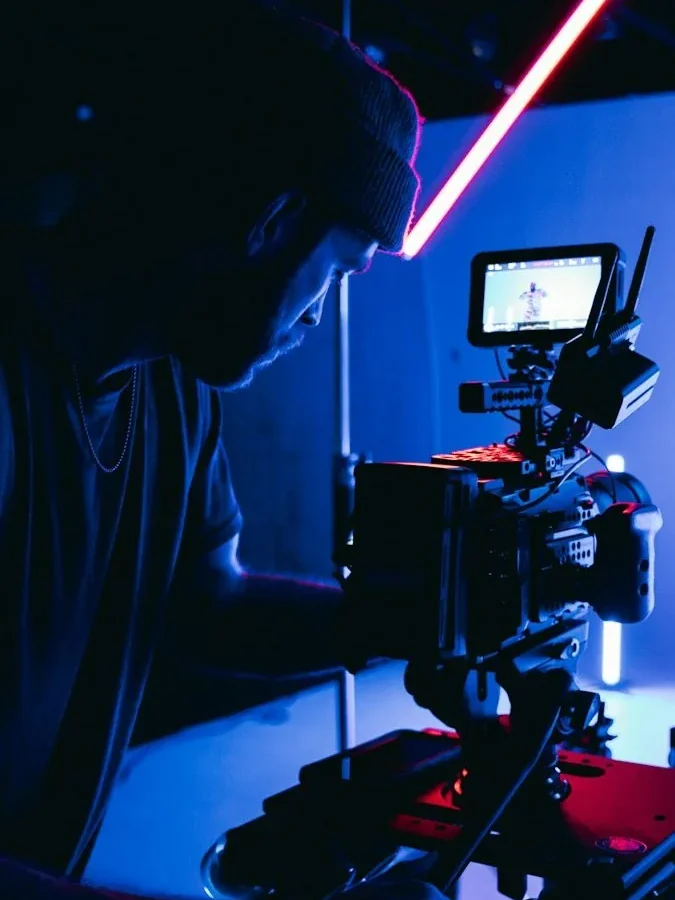
People scroll their feed with a thumb, and the thumb is faster than your logo animation. If in the first three seconds the viewer does not see why they should keep watching, the rest of the video, however good it is, goes unseen. And the ad budget for that unseen video has already been spent.
What happens in the first three seconds
People do not decide to watch. They decide not to scroll. That is the difference: you do not have to persuade, you have to stop them. Movement does that, so does a face, an unexpected shot or a problem the viewer recognises as their own.
A logo, the company name and “Hi, we are…” stop nobody. Leave them for the end, when the viewer already wants to know who you are.
Five openings that work
The result first
Start with the finished result: a cleaned terrace, a tidy wardrobe, a polished car. The process follows afterwards.
A problem people recognise
“If your door creaks in winter, here is why.” A specific problem picks out the viewer who actually needs the product.
A number or a price
“This kitchen cost 6 000 €. Here is where the money went.” A number on screen raises a question people want answered.
Movement in the shot
The camera moves, the product falls, hands are at work. A static first shot loses to anything that moves.
A person talking straight to camera
A face and eye contact stop the scroll better than product photos. Especially if it is the owner or the craftsman talking, not an actor.
What happens after the third second
A good opening buys time, but it does not sell. Ad videos that pay off usually follow a simple line:
- 0 to 3 s
- Stop: a result, a problem, a number or movement.
- 3 to 15 s
- Prove: what it looks like, how it works, who does it.
- 15 to 25 s
- Offer: what the viewer gets and why right now.
- End
- One clear next step and the logo.
The most common mistake is trying to say everything in one video. One video, one idea. If you have three products, film three videos.
Silent by default
Many people watch social media with the sound off. So subtitles are not an extra, they are part of the edit. On-screen text has to sit in the safe zone so platform buttons do not cover it, and the font has to be readable on a phone.
How to measure whether the opening works
Meta ads reports include three-second video plays. Divide them by impressions and you get how often the video stops the scroll. Then look at how many people watch to 15 seconds or to the end. If the opening stops people but the middle loses them, the problem is in the edit, not the idea.
The best test: one and the same video with three different openings. Everything else stays the same, and after a week you can see which opening pays off.
What to film in one day
- Three to five different openings for each video
- Result shots before process shots
- The owner or craftsman talking to camera
- Vertical 9:16 shots with room for subtitles
- Detail shots for the pace of the edit
We come to you, film and edit a month’s worth of content in one day. We prepare a quote within 24 hours.
Plan the filming around the ad, not the other way round. Before the filming day we write a short script for each video with three alternative openings. On the day it saves hours, and in the edit nobody has to hunt for where to start.
Frequently asked questions
How long should an ad video be?
For most ads 15 to 30 seconds is enough. A longer video works for a story or a demonstration, if the first seconds are strong enough.
Can I film with a phone?
Yes, and sometimes it looks more natural. Light, sound and what happens in the first shot matter more than the camera.